Why Marriott is turning hotel rooms into showrooms
Marriott's new online Design Shop takes inspiration from specific hotels and destinations as it seeks to drive more retail sales.
Melissa Daniels·2026.08.03·4 min 阅读EN
事件背景基于真实抓取数据整理
本条来自 Modern Retail(intel),聚焦 零售渠道、品牌营销、财报增长、设计创意。 Marriott is deploying a new e-commerce strategy with destination-specific drops, selling the same decor and furniture found in its hotels as customers continue to impulse-buy based on travel experiences.
Original Intelligence基于真实抓取数据整理
Marriott's new online Design Shop takes inspiration from specific hotels and destinations as it seeks to drive more retail sales
Sections
Explore
Topics
Connect
Marriott is deploying a new e-commerce strategy with destination-specific drops, selling the same decor and furniture found in its hotels as customers continue to impulse-buy based on travel experiences
Marriott's new online Design Shop takes inspiration from specific hotels and destinations as it seeks to drive more retail sales
Sections
Explore
Podcasts
Awards
Events
Newsletters
Topics
The Amazon Effect
New DTC toolkit
Store of the Future
All Topics
Connect
Digiday Media
Digiday
Glossy
Modern Retail
Worklife
Custom
Events
Awards
Why Marriott is turning hotel rooms into showrooms
Marriott is deploying a new e-commerce strategy with destination-specific drops, selling the same decor and furniture found in its hotels as customers continue to impulse-buy based on travel experiences.
Marriott announced Design Shop in May, framing it as a new e-commerce arm of its Bonvoy Boutiques retail operation where customers can buy the same decor, linens and table settings that Marriott’s designers use in its hotels.
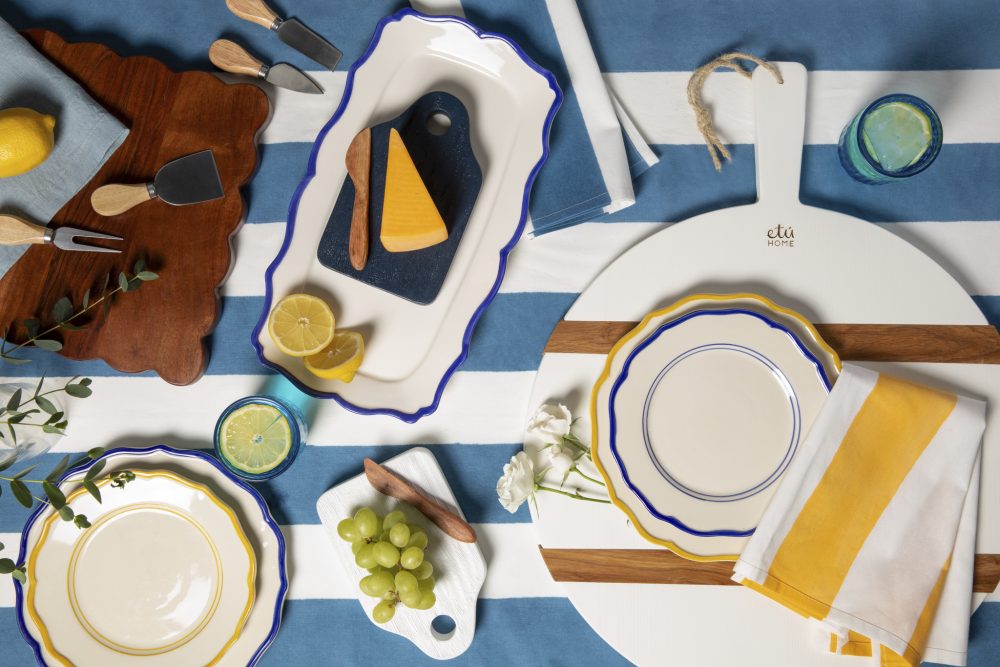
One of its first collections was W Hotels Living, inspired by the newly redesigned W New York – Union Square property. Pieces include a custom headboard, a platform bed and an upholstered bench, plus accents like lighting, art, glass vases, trays and bookends. It also launched the French Riviera Collection, which draws from Marriott properties in Cannes and Nice with serving boards, linens and decor that lean heavily on ocean-evoking shades of blue.
Peggy Roe, evp and chief customer officer at Marriott, said the Design Shop strategy plays off of the “try before you buy” experience people have when they go to hotels, as well as people’s overall interest in wanting to buy curated, personalized items for their home.
“There’s a higher propensity for someone to buy something and cherish it because they found it in a place where they normally wouldn’t,” she said. “And so we’re experimenting with different ways to bring people into the ecosystem, knowing there are a lot of core products they may be interested in.”
Marriott is marketing the shop to guests on hotel-specific digital channels, like the W Union Square Instagram, in-room TV ads with shoppable QR codes, in-room postcards and URLs listed on invoices. It’s also promoting the shop with email marketing to rewards members, who can use points for Design Shop purchases. So far, sales of Design Shop items are driving four times the average order volumes and twice as many units per order as the site average.
Marriott’s strategy is part of the overall convergence between travel and retail. People who are traveling tend to come ready to spend; duty-free shops and cruise ship stores are seeing increased business in recent years, and PwC’s latest survey on summer travel spending showed people spend an average of around $198 on shopping and souvenirs across their vacations.
At the same time, hospitality companies are increasingly blurring the lines between providing an experience and becoming retailers themselves. Some hotels, including the JW Marriott in San Francisco, are curating locally sourced products to sell or gift using the wholesale marketplace Faire. Ace Hotel has long been associated with property-specific merchandise, including curated books, vinyl or beauty products at each location. Marriott is also experimenting with new brand partnerships; the Marriott-owned Ritz-Carlton in mid-July announced that it was joining forces with Merit as its first-ever beauty partnership for co-branded activations, in-room beauty services and limited-edition travel kits.
With Design Shop, part of the appeal is that guests can order something that reminds them of their trip that they can’t find anywhere else, Roe said. Those purchases can be made during the trip as an impulse buy — Marriott’s marketing research shows that about 85% of travelers make unplanned purchases, and about 55% of those are retail or shopping-oriented — or after the fact when a guest is looking for something unique.
“We do believe it will reinforce the brand,” Roe said. “You can take something home that’s curated from your trip or find something you can give to somebody else that you found only because you’re part of our ecosystem.”
Marriott has been beefing up its e-commerce operations since the Covid-19 pandemic. Guests historically would call a front desk to ask for mattress or linens recommendations, and hotels like The Ritz-Carlton have also sold a signature scent. But when people stopped traveling during the pandemic, Marriott saw its product sales grow 26% in 2020 from 2019 as people renovated their homes or looked for items that reminded them of travel. In turn, the company re-situated its Bonvoy Boutiques retail business from operations and procurement to a more customer-focused team.
“We’d always been focused on selling these basics, and then we did some research and thought, ‘This could really be bigger than what it is,'” Roe said.
Roe said that next steps for Design Shop include curating more trend-based items. Westin’s Design Shop collections, for instance, lean into the wellness aesthetic of the brand, which could lead to different iterations of sleep masks being sold. This fall, Design Shop will launch a line inspired by the JW Marriott Hotel Tokyo. But she also said there will be some element of experimentation; a brand event in Cannes this summer offered popular sun hats that then showed up on the website.
“It just depends on the trends, and we’re learning what will be relevant,” she said. “We aspire to put things in front of people that are new discoveries, and things that may be part of the experience and that they might want to take home.”
Barry Thomas, senior global thought leader at Kantar, said there are significant opportunities for hotels to act as retailers given the sampling someone can do while at a property. That’s partly why it’s been so popular for food and beverage brands to seek out partnerships with hotels or airlines. But now, Thomas said, it’s becoming an opportunity for the hotel itself to showcase its own brand.
“Hotels are evolving from just places we stay to brands you live with,” he said. “The guest insights on products and overall relationship last years and decades, and that’s a big deal.”
There’s also the impulse-buy element of travel to tap, Thomas said, where the hotel room becomes a shoppable showroom, like allowing guests to scan a QR code from their hotel room to place an order. It’s a way for hotels, like other in-person services, to “try to become ecosystem brands where they can monetize every physical, digital and data asset they have.”
At the same time, hospitality companies are increasingly blurring the lines between providing an experience and becoming retailers themselves. Some hotels, including the JW Marriot…
marketing
Marriott is marketing the shop to guests on hotel-specific digital channels, like the W Union Square Instagram, in-room TV ads with shoppable QR codes, in-room postcards and URLs l…
ai
Marriott announced Design Shop in May, framing it as a new e-commerce arm of its Bonvoy Boutiques retail operation where customers can buy the same decor, linens and table settings…