What happened when 6.8m people were told real Monet art was AI
AI content is polarizing. When users spot that AI was used in art, backlash often follows. So, let’s run a quick experiment.
本条来自 HubSpot Marketing Blog(marketing),聚焦 品牌营销、人工智能、社媒内容。 This guide will help you make more informed decisions in marketing.
AI content is polarizing
- What happened when 6.8m people were told real Monet art was AI
- AN INTRODUCTION TO MARKETING PSYCHOLOGY
- The Post That Started It All
- How to Use Psychology in Marketing
- This guide will help you make more informed decisions in marketing
AI content is polarizing
When users spot that AI was used in art, backlash often follows
So, let’s run a quick experiment
- Home
- Marketing
- What happened when 6.8m people were told real Monet art was AI
What happened when 6.8m people were told real Monet art was AI
AN INTRODUCTION TO MARKETING PSYCHOLOGY
This guide will help you make more informed decisions in marketing.
AI content is polarizing. When users spot that AI was used in art, backlash often follows. So, let’s run a quick experiment.

Take a look at the picture below. I just generated an image, in the style of a Monet painting, using AI. I used the latest AI models trained on the world’s best artwork. Have a look, and think about what makes this image inferior to a real Monet painting. Think about what you like and what you don’t like about it.
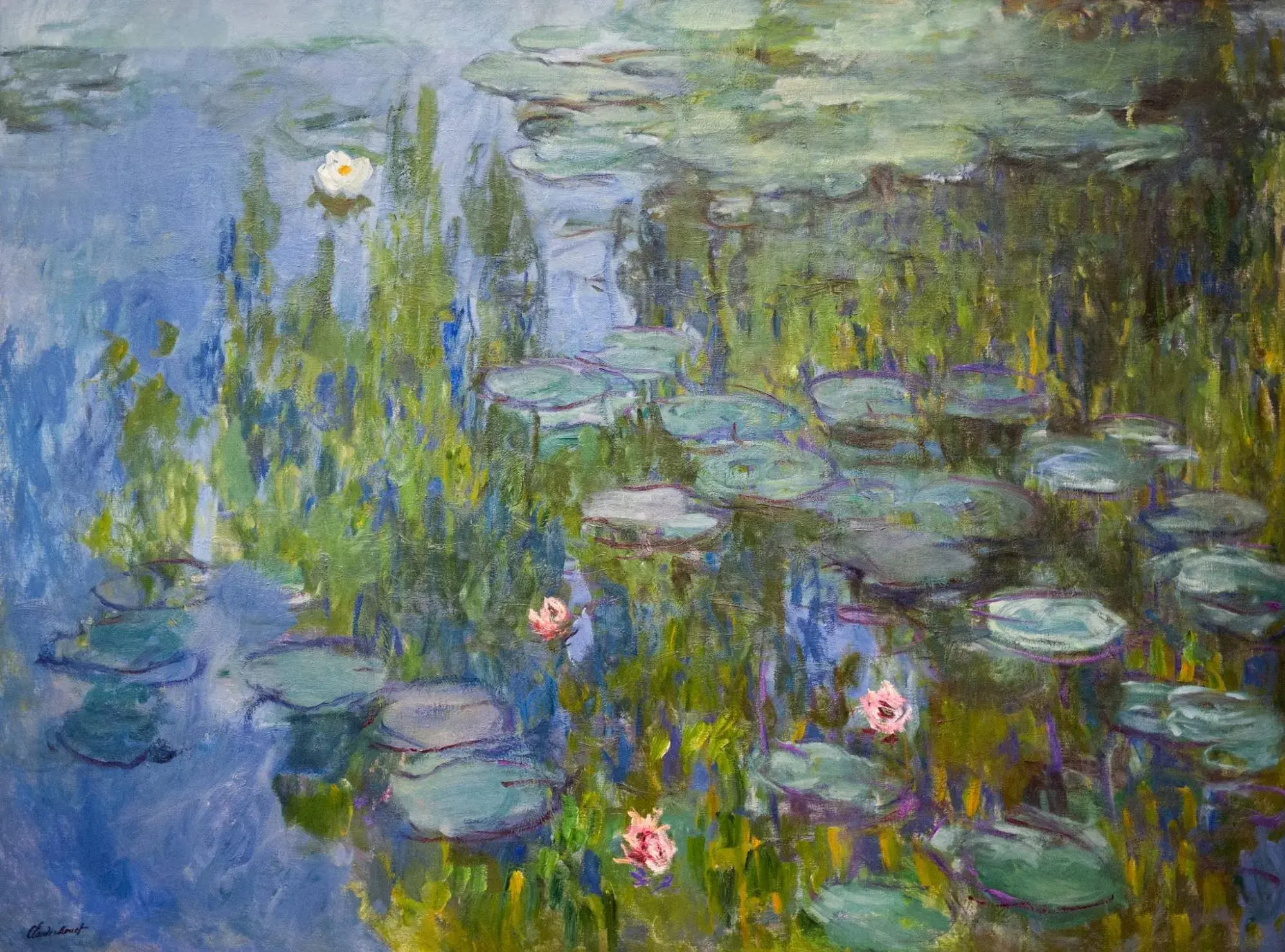
Now, what if I told you that I lied? The image is a real Monet. A few weeks back, X user SHLOMS performed the same exercise. Let’s talk about what happened.
- The Post That Started It All
- The “AI” Painting That Fooled Thousands
The Post That Started It All
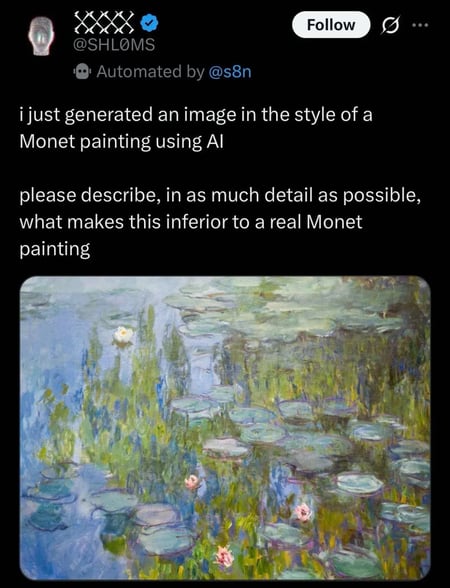
Over 1,300 people responded to SHLOMS’s post with resoundingly similar feedback. Almost everyone who replied said this AI art was pure crap.
They said it lacked “coherent composition.” The colors were an “incoherent muddle.” Some said it was “trying too hard.”
Others called the image “obvious AI slop.” They called it “garbage” and “borked nonsense with no sense of space.” Users picked holes in every aspect of the painting. They questioned its lack of meaning and how AI art simply lacks the magical quality imbued by human creativity.
But there’s a problem … this Monet painting is real.
.png)
How to Use Psychology in Marketing
Access the guide to learn more about psychology.
- Turn customers into fans.
- Understand Maslow's hierarchy of human needs.
- Understand how marketing can influence how people think, feel, and behave.
Download Free
All fields are required.
You're all set!
Click this link to access this resource at any time.
The “AI” Painting That Fooled Thousands
SHOLMS lied. It was their version of a social experiment. They took a real (much-loved) Monet painting, pretended it was an AI-generated image, and then gauged the reaction.
I’ll be honest. My gut reaction to the X post was the same. I immediately thought it was slop. I tried to spot flaws and thought the colors were dull. And it turns out that all of us do this.
When we think art is created by AI, we tend to dislike it. In fact, when we think anything took no effort to build, we dislike it.
We follow what Andrea Morales, Lonnie L. Ostrom Chair in Business and professor in the Department of Marketing at Arizona State University, calls an “effort heuristic.” In other words, if something took two seconds to generate, we’ll hate it. If it took 15 years of craft to perfect, we’ll love it.
In a 2005 study published in the Journal of Consumer Research, Morales found that people will generally reward actions that took a great deal of effort. The study followed 46 participants who were in the market for a new home. They were told to hire a real estate agent to help them search. The agent reviewed their preferences and put together a personalized list of 10 apartments.
However, 23 of the participants were told the agent “did everything manually and spent nine hours building the list.” The other 23 were told that “the agent used a computer program, spending only one hour on the list.”
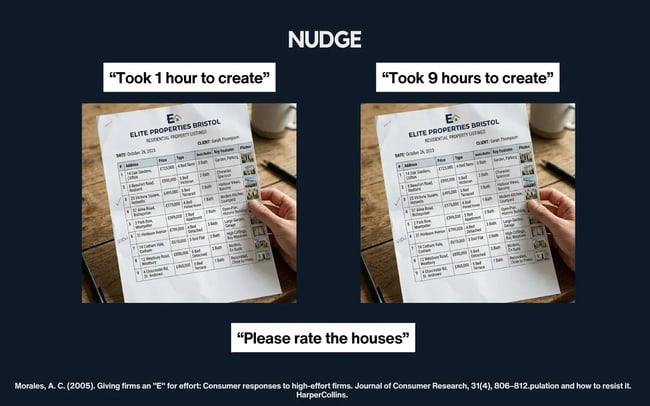
In reality, the houses on both lists were identical. The real estate agent lied about how much time they spent on the search. It always took one hour.
But perception was swayed by the perceived effort. Participants who were told that the list took nine hours to create rated the houses 30.5% higher. We use effort as a proxy to measure quality — especially when quality is hard to measure.
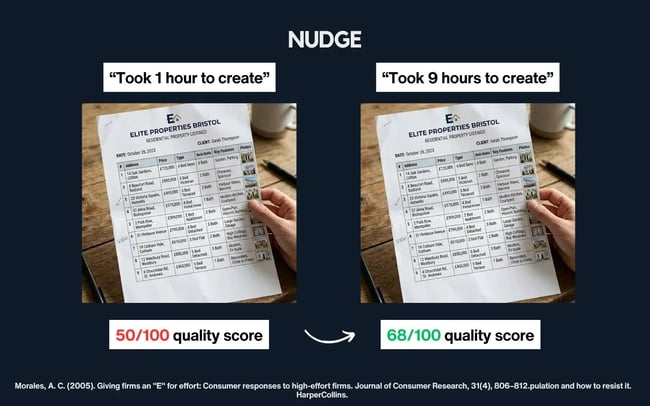
So when 6.8 million people saw an image of a real Monet painting but thought it was AI-generated, they immediately called it slop.
This presents a tricky contradiction. We’re repeatedly told that to compete, we need to embrace AI. But the Morales study shows a different perspective.
If we only use AI (or even if people think we only use AI), people will feel an urge to hate our work. The fantastic copywriter Dave Harland calls this “Death By Sepia.”
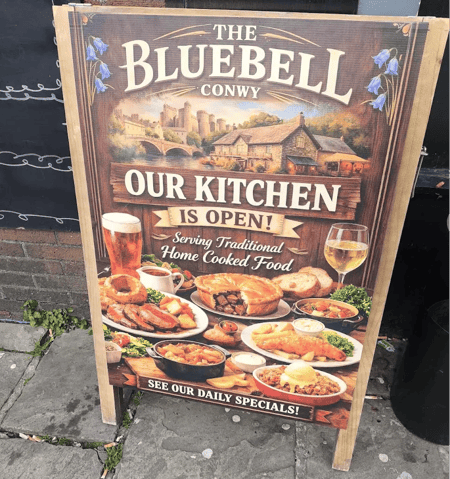
Taken from Dave’s “The Word” newsletter (sign up here).
The landlord at the Bluebell might think this sign is infinitely better than a standard blackboard sign. They might say, “It’s colorful! It stands out! It includes all of our menu! Even a goblet of wine!”
But most people will see it and recognize that off-sepia tone as AI. And as we’ve seen with Monet, once people think something is lazily created with just AI, they’ll dislike it.
I spoke with Professor Matt Johnson about why some AI content falls flat on a recent episode of Nudge. Listen here.
Make something meaningful.
AI changes the calculus of creation, but it doesn’t change human psychology. People still want to know that someone cared and put something of themselves into the work.
Your audience is doing the same math on everything you publish. Give them a reason to believe that someone put their time, effort, and craft into your marketing.
How to Use Psychology in Marketing
- Turn customers into fans.
- Understand Maslow's hierarchy of human needs.
- Understand how marketing can influence how people think, feel, and behave.
Download Free
You're all set!
Marketing Psychology
Related Articles
- The simple genius behind this long-forgotten Google Chrome ad
- Can music influence what we buy? To find out, I dove into the psychology of music
- The psychological reason brands use the power of association to sell
- The psychology behind clicks: Where digital marketing meets neuroscience
- This behavioral science principle can make your billboard go viral, here’s how
- Six simple behavioral science tips to improve any marketing message (and the brands that get it right)
- The AIDA Model: A Proven Framework for Converting Strangers Into Customers
- The Psychology of Short-Form Content: Why We Love Bite-Sized Videos
- The psychological technique marketers need to make engaging videos
- The Science Behind Social Shopping: Why We Are Always 'Clicking to Buy', According to Psychologists
Practical. Tactical. Actionable Thanks for Subscribing!
Up your marketing game with advice, tips, and stories from the experts three days a week. Subscribe to Marketing Against the Grain below.
Want to learn how to build a blog like this?We started with one post.Download free ebook
本条目归入「Brand Marketing」垂直,涉及真实话题:品牌营销、人工智能、社媒内容。
· 市场:关注 品牌营销、人工智能 对相关品类与竞争格局的潜在影响。
· 消费者:受众行为与偏好变化值得追踪。
· 品牌:本动向对品牌资产建设的启示。
· 渠道:内容分发与触点组合(社媒 / 电商 / 线下)的协同值得复盘。
· 核心话题:品牌营销、人工智能、社媒内容。
· 可思考:如何把「品牌营销」的洞察,转化为可衡量的内容与增长动作?
面试中可引用「What happened when 6.8m people were told real Monet art was AI」:围绕 品牌营销、人工智能、社媒内容,说明你对行业动向的判断与可落地动作。
本条目相关英文术语可在「商务英语」模块按话题检索,用于外企面试表达训练。
This guide will help you make more informed decisions in marketing.…
In a 2005 study published in the Journal of Consumer Research, Morales found that people will generally reward actions that took a great deal of effort. The study followed 46 parti…
AI content is polarizing. When users spot that AI was used in art, backlash often follows. So, let’s run a quick experiment.…