Profound vs. Semrush AEO: What each tool actually does
Profound and Semrush have both staked out positions in the answer engine optimization space, but they’re built for different teams with different goals. This post breaks down what each tool actually does, where they differ on engine coverage, prompt research, dashboards, and pricing, and how to decide which one fits your workflow.
本条来自 HubSpot Marketing Blog(marketing),聚焦 品牌营销、人工智能。 See exactly where your brand shows up in answer engines and take action to close AI visibility gaps.
Profound and Semrush have both staked out positions in the answer engine optimization space, but they’re built for different teams with different goals
- Profound vs. Semrush AEO: What each tool actually does
- HUBSPOT AEO TOOL
- What is AEO and how is it different from SEO?
- HubSpot AEO Tool
- See exactly where your brand shows up in answer engines and take action to close AI visibility gaps
Profound and Semrush have both staked out positions in the answer engine optimization space, but they’re built for different teams with different goals
This post breaks down what each tool actually does, where they differ on engine coverage, prompt research, dashboards, and pricing, and how to decide which one fits your workflow
- Home
- Marketing
- Profound vs. Semrush AEO: What each tool actually does
Profound vs. Semrush AEO: What each tool actually does
HUBSPOT AEO TOOL
See exactly where your brand shows up in answer engines and take action to close AI visibility gaps.
Profound and Semrush have both staked out positions in the answer engine optimization space, but they’re built for different teams with different goals. This post breaks down what each tool actually does, where they differ on engine coverage, prompt research, dashboards, and pricing, and how to decide which one fits your workflow.

We’ll also cover HubSpot AEO, a third option worth considering if you want AI visibility connected to your CRM and marketing stack from day one.
- What is AEO and how is it different from SEO?
- Profound vs. Semrush AEO At A Glance
- Profound vs. Semrush AEO Engine Coverage
- How Prompt Research Works In Each Tool
- Visibility Dashboards and Answer Views Compared
- Profound vs. Semrush AEO Site Health and AI Crawler Analytics
- Pricing and Value by Use Case
- When to Choose Profound vs. When Semrush Is Enough
- How to Operationalize AEO In Your Stack
- Frequently Asked Questions About Profound vs. Semrush AEO
What is AEO and how is it different from SEO?
SEO focuses on visibility in traditional search results. AEO focuses on visibility in AI-generated answers. That’s the clean version. The messier reality is that the two share plenty of tactics but differ in measurement, tooling, and what “winning” actually means.
When someone Googles a question, they get a list of blue links. When they ask ChatGPT, Gemini, or Perplexity the same question, they get a synthesized, semantic search result that may or may not include your brand. Answer engine optimization is the practice of making sure your brand shows up in those answers, accurately and favorably.
This matters now because buyer behavior is shifting faster than most teams realize. Rather than clicking through ten results, people increasingly ask AI for recommendations and act on the first response they get. If you’re not in that answer, you’re not in the consideration set.
HubSpot AEO Tool
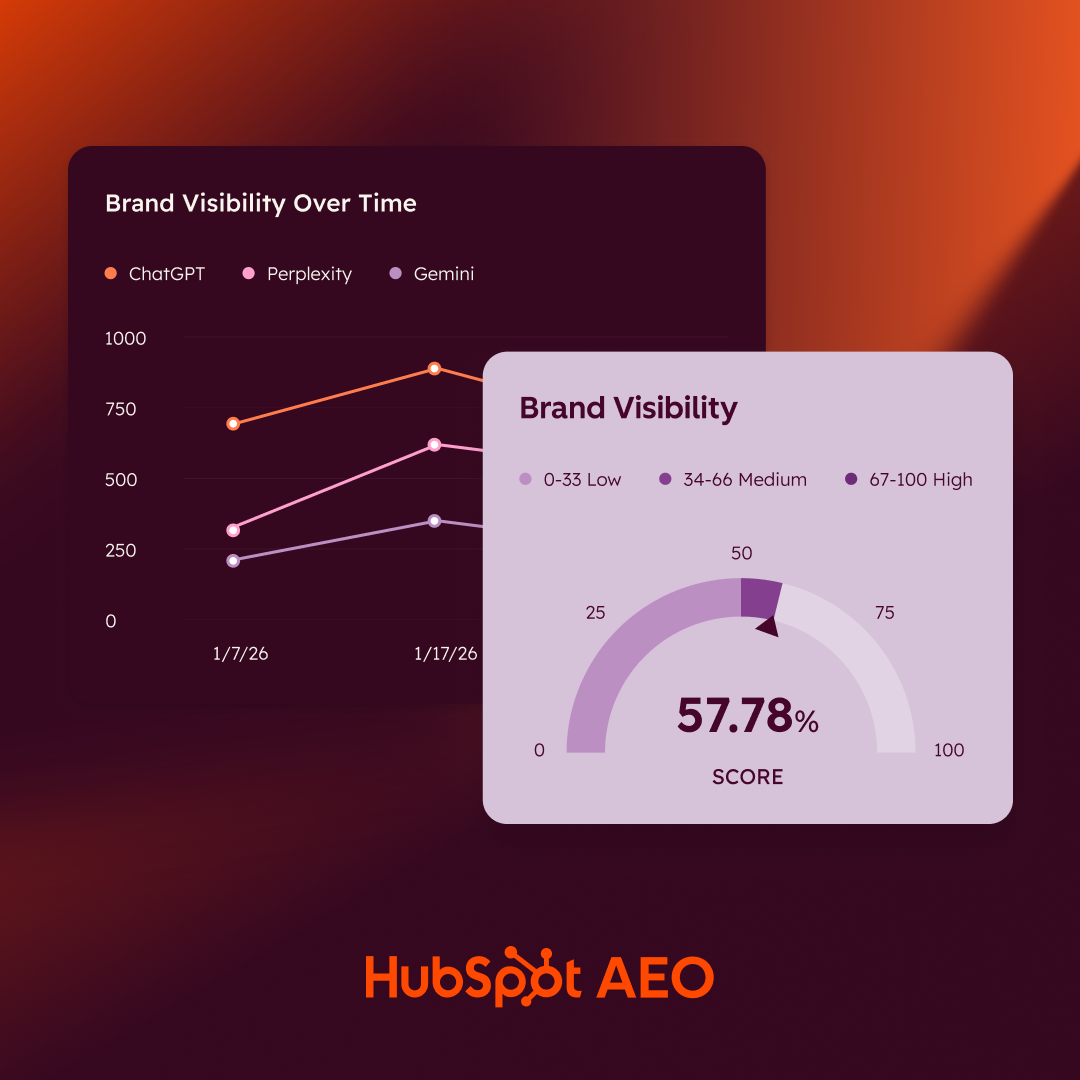
- Track AI mentions.
- Analyze citations
- Monitor prompts
- Benchmark competitors
Quick checklist: Do you need to care about AEO now?
- Your buyers research solutions by asking AI tools before visiting vendor sites
- You’re in a category where competitors are already showing up in AI answers
- You track branded search and want to understand AI mentions alongside it
- Your content team is creating thought-leadership and wants to know if it’s landing in AI channels
You can likely hold off if:
- Your sales cycle is almost entirely outbound or referral-based
- You’re in a heavily regulated category where AI rarely surfaces specific vendors
- You don’t have anyone to act on the insights (data without action isn’t worth much)
Not sure where you stand? The AEO Grader gives you a free baseline on your current AI visibility before you invest in any platform.
Profound vs. Semrush AEO At a Glance
Here’s the honest summary: Profound and Semrush are solving different problems. Profound is a purpose-built AEO tool. Semrush is a full-stack digital marketing platform that added AI visibility features to an already large product suite. That distinction shapes everything from the depth of data to the workflow it fits into.
SEO + AI visibility combined
AEO integrated with CRM and marketing ops
Browser-based (mimics real user experience)
Historical database (239M tracked LLM prompts)
Live answer engine queries with CRM context
Up to 10 (Starter: ChatGPT only)
ChatGPT, Gemini, Perplexity, Google AI Overviews
ChatGPT, Gemini, Perplexity
Custom prompt volume
CRM-suggested; 25 on free trial
Server log tracking (no JS required)
Traditional site crawler
No-code Agents workflow builder
Content Toolkit + social/email repurposing
Connects directly to Content Hub and Marketing Hub
Teams focused entirely on AI visibility
Teams managing SEO, local, social, and AI together
Teams wanting AEO connected to CRM and pipeline
Want to see AEO in action before committing to a platform?
Get a demo of HubSpot AEO — See how HubSpot connects AI visibility to your CRM data and turns insights into action without switching platforms.
Profound vs. Semrush AEO Engine Coverage
Engine coverage affects AEO tool usefulness more than most buyers realize when they’re first evaluating options. A tool that only tracks ChatGPT leaves you unaware of how you show up in Gemini, Perplexity, and Google AI Overviews, which together represent a massive share of AI-driven queries.
Profound’s engine access is tiered by plan:
- Starter ($99/mo): ChatGPT only, 1 region/language
- Growth ($399/mo): ChatGPT, Perplexity, Google AI Overviews (3 engines)
- Enterprise (custom): Up to 10 engines including Claude, Gemini, Meta AI, Grok, and others
The jump from Starter to Growth is significant. If ChatGPT-only is your starting point, you won’t see how your brand performs on Perplexity, where many technical and research-oriented buyers spend time, or on Google AI Overviews, where traditional search and AI search are already merging. For a real AEO program, Growth is effectively the entry point.
Semrush’s AI visibility features track across ChatGPT, Gemini, Perplexity, and Google AI Overviews at its paid AEO tiers. The key caveat: the base SEO plan at $139.95/mo doesn’t include custom AI prompt tracking. You need to step up to the Starter plan at $199/mo to unlock 50 custom AI prompts across a single domain.
Why engine coverage matters:
If your brand operates across multiple segments or regions, the engine your buyers use may vary. B2B buyers tend to use Perplexity heavily. Consumer categories see more ChatGPT and Gemini activity. A multi-engine view gives you much more reliable signal than a single-engine dashboard — and it’s what separates a real AEO program from a vanity metric.
Pro tip: Before picking a plan, map which engines your buyers actually use. Check with your sales team, look at referral traffic from AI sources, and see where competitors are being mentioned. That tells you which engine tier you actually need — and saves you from starting on a plan you’ll outgrow in a month.
How Prompt Research Works In Each Tool
Prompt research supports content planning and experiment design in AEO the same way keyword research does in traditional SEO. The quality of your prompt list determines the quality of your visibility data.
How Profound handles it:
Profound’s approach centers on a curated set of prompts you define and track over time. You identify prompts that reflect real buyer questions in your category, then track how your brand appears in answers to those prompts across your monitored engines. The strength is depth: for each tracked prompt, you can see the exact browser-captured answer, which gets closer to what your buyer actually sees than API-sampled data would. Profound’s Growth plan tracks 100 prompts; Enterprise scales higher with API access.
For content workflows, Profound’s Agents feature is a no-code drag-and-drop builder that lets you automate AI-search-informed content creation. You define the workflow, humans approve before anything goes live, and Profound handles the connective tissue between prompt insights and content output.
How Semrush handles it:
Semrush’s scale advantage shows up clearly in prompt discovery. Its database includes 239 million tracked LLM prompts, so you can identify prompts that are already driving AI answers in your category before you even build your tracking list. That’s useful for teams starting from zero who aren’t sure which questions to track. Custom prompt tracking then caps at 50 to 200 prompts depending on your plan.
Semrush’s Content Toolkit generates and optimizes content for both Google and AI search, and connects directly to tools for repurposing content to social media and email. For teams already managing content operations in Semrush, that’s a real workflow advantage.
My take: Profound’s browser-based capture gives you higher-fidelity data per prompt. Semrush’s database helps you discover prompts to track faster. If you’re starting from zero, Semrush’s existing data is a solid head start. If you already know your target prompts and want to see exactly what your buyers are seeing, Profound’s capture method is harder to beat.
HubSpot AEO Tool
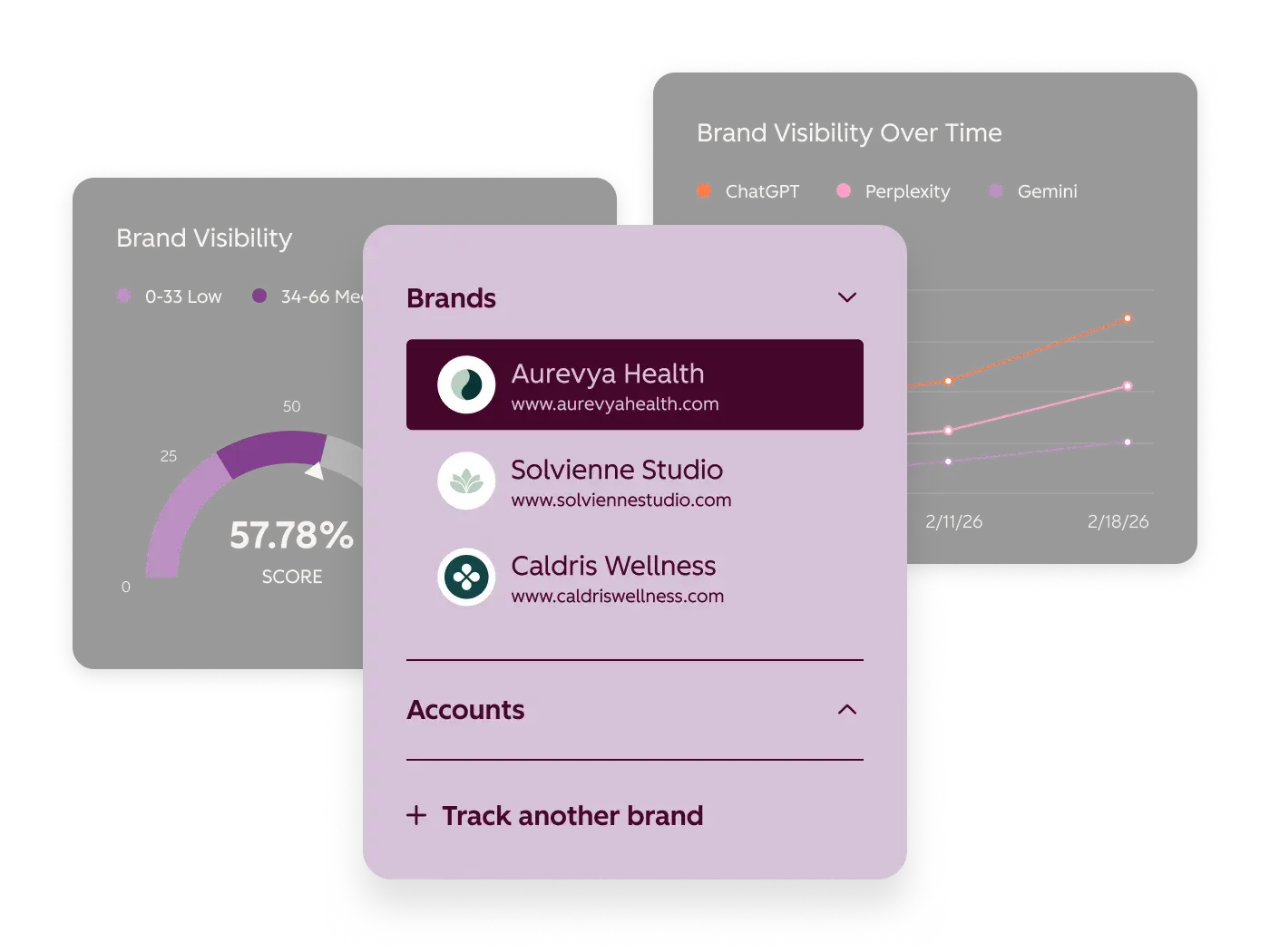
- Track AI mentions.
- Analyze citations
- Monitor prompts
- Benchmark competitors
Visibility Dashboards and Answer Views Compared
AI visibility dashboards show visibility metrics across tracked prompts and engines, but the way each platform presents that data differs meaningfully.
Profound’s dashboard:
Profound is built around AI search from the ground up, and it shows. You get visibility scores per prompt and per engine, competitive share of voice, sentiment analysis, and answer views. Answer views show how your brand appears inside specific AI answers: you can pull up the exact response a buyer would have seen, including citations, phrasing, and sentiment framing. This is particularly useful for understanding how AI is narrating your brand, not just whether you showed up.
Semrush’s dashboard:
Semrush surfaces AI visibility data within its broader SEO dashboard. You see brand mentions across tracked AI prompts, competitive comparisons, and sentiment signals, but all in context with your traditional search rankings, backlink profile, and content performance. For teams that need to report on their full digital presence to leadership, this unified view has real value. The tradeoff is that AI-specific views aren’t as granular as Profound’s.
Where HubSpot AEO fits:
HubSpot AEO takes a different approach that’s worth understanding: it starts from your CRM. Because HubSpot knows your customers, competitors, and product positioning, its prompt suggestions and visibility data are grounded in your actual business context from day one, not a generic template.
- Best for score-centric dashboards: Semrush, if you want AI visibility in context with your full SEO program.
- Best for answer-level views: Profound, if you need to see exactly what buyers are seeing.
- Best for connecting visibility to pipeline: HubSpot AEO, where CRM integration makes every insight more actionable.
Profound vs. Semrush AEO Site Health And AI Crawler Analytics
AI crawler analytics help verify bot access and content readiness, and this is one area where Profound and Semrush take different approaches.
Profound — Agent Analytics:
Profound reads server logs directly, without needing JavaScript trackers. That means you can see which AI bots (GPTBot, ClaudeBot, PerplexityBot, and others) are crawling your site, which pages they’re accessing, and at what frequency — regardless of whether your site runs JavaScript well or whether a bot is executing scripts. For teams with complex CMS setups or paywalled content, this is a meaningful technical advantage. Profound’s server log analysis reveals actual crawler behavior instead of inferred behavior from a simulated audit.
Semrush — AI Search Site Health:
Semrush’s AI Search Site Health audit checks crawlability from an AI bot perspective, but it operates more like a traditional site crawler. You get actionable flags around structured data, indexability, and page accessibility. Semrush’s AI Search Site Health audit doesn’t provide the server log depth that Profound’s Agent Analytics delivers.
本条目归入「Brand Marketing」垂直,涉及真实话题:品牌营销、人工智能。
· 市场:关注 品牌营销、人工智能 对相关品类与竞争格局的潜在影响。
· 消费者:谷歌 Google 的受众行为与偏好变化值得追踪。
· 品牌:谷歌 Google 的叙事、产品与增长动作可拆解复用。
· 渠道:内容分发与触点组合(社媒 / 电商 / 线下)的协同值得复盘。
· 涉及品牌:谷歌 Google。
· 核心话题:品牌营销、人工智能。
· 可思考:如何把「品牌营销」的洞察,转化为可衡量的内容与增长动作?
面试中可引用「Profound vs. Semrush AEO: What each tool actually does」:围绕 谷歌 Google,说明你对行业动向的判断与可落地动作。
本条目相关英文术语可在「商务英语」模块按话题检索,用于外企面试表达训练。
See exactly where your brand shows up in answer engines and take action to close AI visibility gaps.…
We’ll also cover HubSpot AEO, a third option worth considering if you want AI visibility connected to your CRM and marketing stack from day one.…
If your brand operates across multiple segments or regions, the engine your buyers use may vary. B2B buyers tend to use Perplexity heavily. Consumer categories see more ChatGPT and…