A CMO’s guide to machine relations
Let Marketing Dive's free newsletter keep you informed, straight from your inbox. PenVine’s Jennifer Schenberg shares the steps marketers n
本条来自 Marketing Dive(Marketing / 资讯),聚焦 brand、consumer。 Let Marketing Dive's free newsletter keep you informed, straight from your inbox.
Let Marketing Dive's free newsletter keep you informed, straight from your inbox
- Let Marketing Dive's free newsletter keep you informed, straight from your inbox
Let Marketing Dive's free newsletter keep you informed, straight from your inbox
PenVine’s Jennifer Schenberg shares the steps marketers n
Let Marketing Dive's free newsletter keep you informed, straight from your inbox.
PenVine’s Jennifer Schenberg shares the steps marketers need to follow to close the gap between visibility and validation on AI platforms.
The following is a guest piece written by Jennifer Schenberg, CEO at PenVine. Opinions are the author’s own.
AI is writing your brand story right now, forcing a choice: Take control of your narrative or surrender it to algorithms and aggressive competitors. From startups to global enterprises, brands fall into three camps: those terrified of invisibility, those racing to ensure accuracy and those still unconvinced AI has any real impact yet. Whichever camp they're in, CMOs have their work cut out for them.
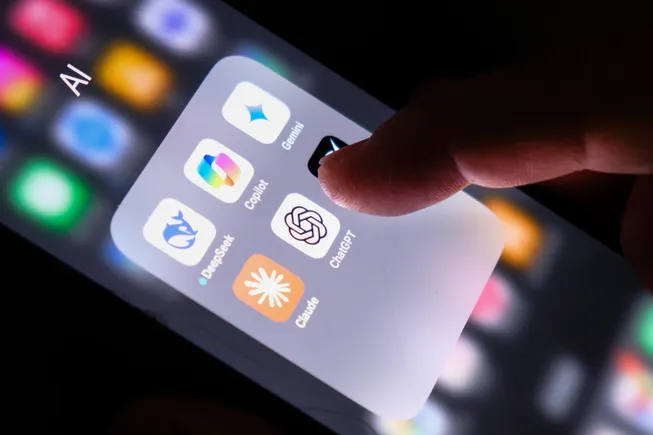
Buyers no longer research purchasing decisions on a brand's website or in a traditional search bar. They ask ChatGPT, Perplexity, Gemini and Claude who is trustworthy. The question is, are you included in that answer?
Recently, I asked communications leaders in an SEO industry group I lead where they stand on AI visibility. Eighty percent said they are actively experimenting with Generative Engine Optimization (GEO) strategies, but only 20% have made it core to their communications strategy. This gap defines the state of brand discovery today.
CMOs experimenting with GEO are adapting to a new audience: the machines. Because AI engines prioritize credibility, the same earned-media results that won headlines now win citations. Making machine relations a central pillar of a modern PR strategy is crucial to winning in generative discovery because brands must continually feed the underlying models. Growth-stage companies earn their way into AI answers for the first time, while enterprise brands protect their established narratives from drift, decay and hallucination.
Most early GEO programs asked a single question: Does the brand show up in AI answers? But visibility is just table stakes. The more important question is whether buyers act on the response. Visibility gets a brand mentioned, but validation is what gets it recommended.
Here are five steps CMOs should take to close the gap:
Run a brand visibility audit using adversarial prompting, testing the skeptical questions a buyer would ask. How do the engines represent your brand across category, brand and product prompts? Where do competitors own the narrative?
When AI visibility platform Profound analyzed overlapping domains across AI engines, they found only an 11% citation overlap, meaning a brand can dominate in ChatGPT while remaining virtually invisible in Perplexity. That's why CMOs must test each ecosystem individually.
Earned media represents the lion's share of AI citations. As public LLMs replace traditional search, Gartner predicts 2x growth in PR and earned media budgets by 2027. Why? Because more than 95% of links cited in AI answers come from nonpaid sources, and Muck Rack's million-link analysis found 89% of AI citations come directly from earned media.
AI engines trust what humans trust: facts, reviews and third-party validation found in the sources machines crawl, such as news outlets, analyst reports and digital communities. Now, every media placement does double duty, earning trust from human readers while feeding the algorithms that cite it.
Shared media builds what engines reward most: trust and genuine connection. Reddit is currently the single most-cited source across major AI engines, driving 40% of AI answers, beating Google, YouTube and Wikipedia results combined.
Reddit thrives on peer-to-peer conversations where consumers wield significant influence over brand trust. For one of my clients, a renowned forensic psychologist, hosting a Reddit Ask Me Anything (AMA) session in subreddits like r/parenting and r/divorce provides users with expert answers and actionable advice. This builds a dedicated community following and a level of trust that money can't buy.
Clean up your footprint across third-party listings. Platforms like Clutch, Crunchbase, G2 and Wikipedia serve as foundational seed data for how an LLM understands a business as an entity. Wikipedia alone accounts for up to half of ChatGPT's top citations . Bottom line: CMOs need to shift their strategy from keyword-stuffing to entity-anchored communication, making the brand, its structured data and its executive expertise the most trusted sources for an AI to cite.
Owned content must be built for machine extraction to power brand discovery. Incorporate these four best practices into your marketing playbook:
And don’t count on SEO to do this work. Studies show that 60% of URLs cited across major AI engines didn't even rank in the top 20 organic search results for the same prompt in Google or Bing. The brands that get cited build subject-matter authority with parsable answers.
Fragmented earned media sabotages AI visibility. When LLMs encounter inconsistent or contradictory messaging across trusted channels, they bypass your brand and cite competitors with a more consistent story. But a consistent cross-channel narrative turns AI engines into your strongest advocates. We took one biotech client from zero visibility to zero-click visibility across AI engines using a consistent narrative, coverage in high-trust sources and deep customer validation. Now, they rank #1 or #2 in their category inside AI answers.
Forrester reports that 94% of B2B buyers use AI during their purchasing process, and Gartner finds 67% prefer a rep-free journey. That autonomy hands CMOs more than a mandate: AI visibility metrics can finally tie PR results to revenue, something share of voice never could. Integrating traditional SOV tracking with share of model lets CMOs evaluate competitor gaps across LLMs while connecting AI recommendations to pipeline velocity.
While my poll highlights a massive gap in active GEO adoption, a recent Semrush survey reveals that only 22% of respondents have fully integrated their traditional SEO and AI search efforts. For brands, this operational disconnect presents a major risk: invisibility and market misrepresentation.
CMOs: An answer about your brand is being assembled right now in engines your buyers are actively using. The 20% who make machine relations core to their communications strategy will own their categories. The other 80% will read about them.
Get the free daily newsletter read by industry experts
Ten-figure acquisitions, new agency experiments and organizational changes are underway, but the real key may be relinquishing a sense of control.
The sense of a stable middle ground is eroding across an industry at a point of contraction, with many displaying mixed feelings about marketing s future.
Keep up with the story. Subscribe to the Marketing Dive free daily newsletter
Subscribe to Marketing Dive for top news, trends & analysis
Sign up for the free newsletter.
Interested? Explore more of what has to offer.
You're all set Thanks for signing up! Please keep an eye out for a confirmation email from [email protected] To ensure we make it into your inbox regularly, add us to your allow list, mark us as a safe sender, or add us to your address book. Check out more from
Get the free daily newsletter read by industry experts
Ten-figure acquisitions, new agency experiments and organizational changes are underway, but the real key may be relinquishing a sense of control.
The sense of a stable middle ground is eroding across an industry at a point of contraction, with many displaying mixed feelings about marketing s future.
The free newsletter covering the top industry headlines
本条目归入「Brand Marketing」垂直,涉及真实话题:brand、consumer。
· 市场:关注 brand、consumer 对相关品类与竞争格局的潜在影响。
· 消费者:受众行为与偏好变化值得追踪。
· 品牌:本动向对品牌资产建设的启示。
· 渠道:内容分发与触点组合(社媒 / 电商 / 线下)的协同值得复盘。
· 核心话题:brand、consumer。
· 可思考:如何把「brand」的洞察,转化为可衡量的内容与增长动作?
面试中可引用「A CMO’s guide to machine relations」:围绕 brand、consumer,说明你对行业动向的判断与可落地动作。
本条目相关英文术语可在「商务英语」模块按话题检索,用于外企面试表达训练。
AI is writing your brand story right now, forcing a choice: Take control of your narrative or surrender it to algorithms and aggressive competitors. From startups to global enterpr…
Let Marketing Dive's free newsletter keep you informed, straight from your inbox.…
Reddit thrives on peer-to-peer conversations where consumers wield significant influence over brand trust. For one of my clients, a renowned forensic psychologist, hosting a Reddit…