SEO tools marketers rely on (free & paid options)
SEO might feel like it’s under threat with the rise of AI. But the data tells a different story — SEO tools are still a must-have for marketers. In a HubSpot survey , 27% of marketers agreed that the biggest ROI channel of this year was the website, blog, and SEO.
本条来自 HubSpot Marketing Blog(marketing),聚焦 品牌营销、人工智能。 Improve your content strategy with HubSpot's content & SEO planning tool.
SEO might feel like it’s under threat with the rise of AI
- SEO tools marketers rely on (free & paid options)
- SEO & CONTENT STRATEGY TOOL
- Which SEO tools do you actually need right now?
- Keyword Research
- Improve your content strategy with HubSpot's content & SEO planning tool
SEO might feel like it’s under threat with the rise of AI
But the data tells a different story — SEO tools are still a must-have for marketers
In a HubSpot survey , 27% of marketers agreed that the biggest ROI channel of this year was the website, blog, and SEO
- Home
- Marketing
- SEO tools marketers rely on (free & paid options)
SEO tools marketers rely on (free & paid options)
SEO & CONTENT STRATEGY TOOL
Improve your content strategy with HubSpot's content & SEO planning tool.
SEO might feel like it’s under threat with the rise of AI. But the data tells a different story — SEO tools are still a must-have for marketers. In a HubSpot survey, 27% of marketers agreed that the biggest ROI channel of this year was the website, blog, and SEO.

It’s fair to say that SEO has changed, but it’s still an essential component of a successful marketing strategy. The key is having an excellent strategy, timely execution, and stakeholder buy-in, with reporting that proves the channel’s success. All of this hinges on picking the best SEO marketing software. It means choosing a stack that drives the business forward without breaking the bank.
- Which SEO tools do you actually need right now?
- How We Evaluate SEO Tools for This Guide
- Tool Comparison Cheat Sheet
- Best SEO Tools
- How to Measure and Improve Visibility in AI Search
- Frequently Asked Questions About SEO Tools
Which SEO tools do you actually need right now?
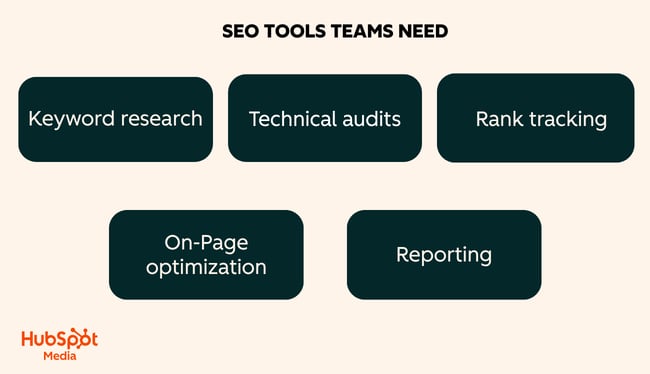
SEO tools often have overlapping features, which makes it difficult to know which one (or ones) actually fit. The goal is a stack that covers all five of the below functions well, using as few tools as possible to keep costs down without sacrificing quality.
Keyword Research
Keyword research is the starting point for almost every SEO initiative. It determines what content gets created and which SEO terms a page is optimized to rank for.
SEO tools help with keyword research by surfacing search volume, competition data, and related terms that would otherwise take hours to find manually. Keyword research tools support topic clustering and intent analysis, enabling marketers to group related terms and understand whether searchers are looking to learn, compare, or buy. This matters because targeting the wrong intent, even for a high-volume keyword, often leads to content that ranks but doesn’t convert.
Technical Audits
Technical SEO covers the behind-the-scenes factors that determine whether search engines can crawl, index, and properly understand a site. SEO tools help with technical SEO audits by scanning for issues like broken links, duplicate content, slow load times, and indexing errors that would be nearly impossible to catch manually across a large site.
Technical SEO tools detect crawl issues, Core Web Vitals problems, and schema errors. These issues matter because a technically broken site limits how much keyword research and content work can pay off.
Rank Tracking
Rank tracking shows where pages stand in search results over time, which makes it possible to connect SEO work to actual outcomes rather than guesswork. SEO tools help with rank tracking by automatically monitoring keyword positions and flagging significant jumps or drops before they become bigger problems.
Rank tracking tools monitor keyword positions across locations and SERP features. A single average ranking doesn’t tell the entire story when results vary by city or device, or when they appear within features like local packs and featured snippets.
Featured Resource: How to Find SERP Feature Opportunities [+ Free Tools]
On-page Optimization
On-page optimization covers everything on a page itself, including titles, headers, body content, internal links, and image alt text. SEO tools help with on-page content optimization by scoring content against ranking pages, suggesting related terms to include, and flagging missing elements like meta descriptions. On-page signals remain one of the clearest ways search engines determine relevance, and small fixes often produce outsized results compared to the effort involved.
Reporting
Reporting turns SEO activity into evidence that the channel is working, which is often the difference between a program that keeps its budget and one that doesn’t. SEO tools help with SEO reporting by pulling traffic, ranking, and conversion data into dashboards that can be shared with stakeholders who don’t work in SEO daily. SEO results take time to materialize, and consistent reporting keeps leadership patient and engaged in the meantime.
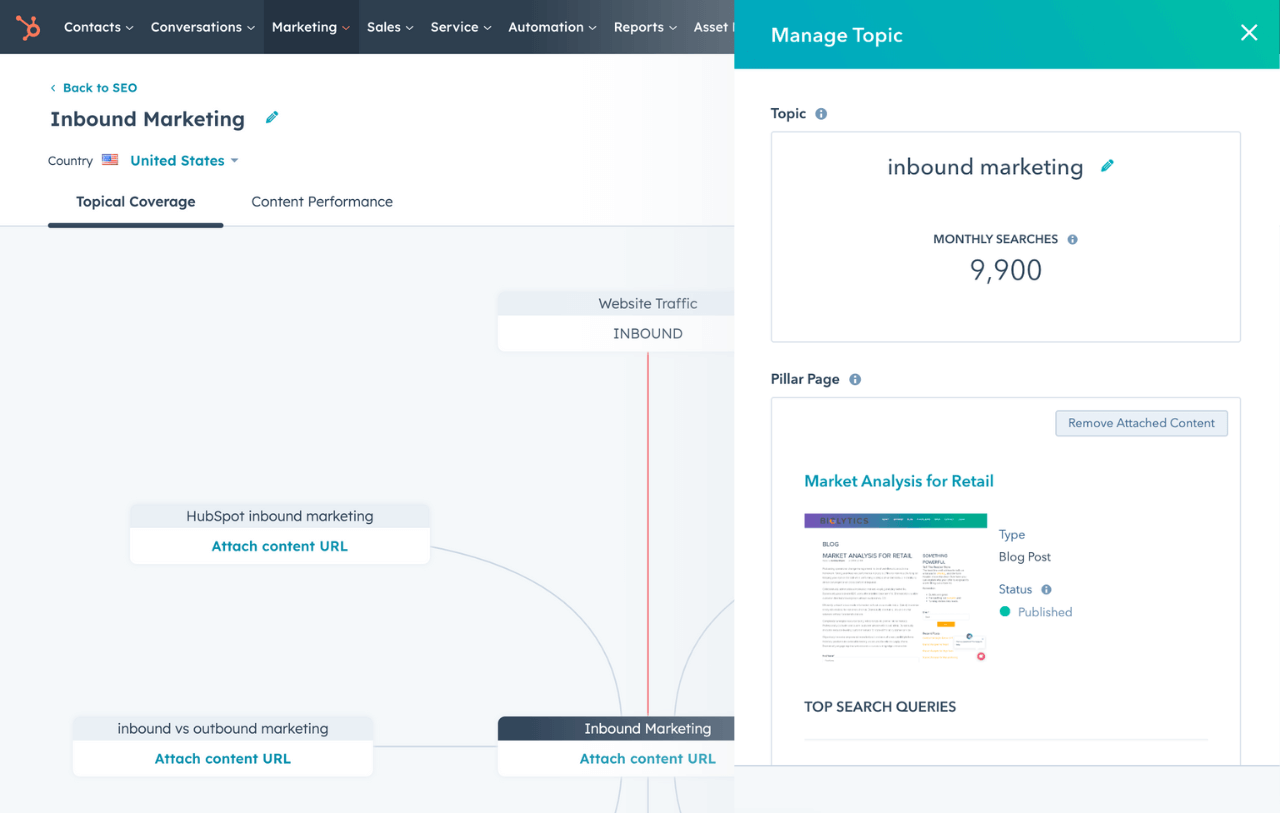
HubSpot SEO Marketing Software
Build your authority in search with tools that help you plan your SEO strategy, optimize your content, and measure ROI.
- Get SEO recommendations.
- Create an optimized content strategy.
- Build search authority.
- And more!
How We Evaluate SEO Tools for This Guide
- Quality over quantity. I looked at how well a tool does its core job rather than how many features it has. A keyword research tool that surfaces accurate volume and intent data beats one that bundles in extra features it only does adequately.
- Accessibility for different budgets. For every category, except platforms for scaling, I made sure there was at least one credible, free or low-cost option alongside the paid tools, since not every team can justify enterprise pricing on day one.
- Ease of use. A tool with a steep learning curve might be powerful, but for each category, I prioritized at least one option that a beginner or a lean team could pick up quickly.
- Connection to reporting and revenue. SEO work that stays siloed in its own dashboard is harder to defend to stakeholders, so I included tools that integrate with analytics platforms or a CRM, since that’s where SEO performance gets tied to pipeline and business outcomes.
- AEO visibility. Search no longer ends at a results page, so I included tools built specifically to track how brands appear inside AI-generated answers, not just traditional rankings.
Tool Comparison Cheat Sheet
HubSpot’s Website Grader
Free Tools / Technical Audits
Scores performance, SEO, mobile-readiness, and security; pairs every issue with a specific recommendation
Beginners, non-technical teams
Google Search Console
Free Tools / Keyword Research / Rank Tracking
Real Google performance data: clicks, impressions, position, CTR; flags indexing and mobile issues
Beginners through advanced teams
HubSpot’s SEO Recommendations
Technical Audits / On-Page Optimization
Domain and page-level scans; recommendations filtered by category, impact, difficulty, and role (marketer/developer)
Non-technical SEO teams needing clear ownership
Basic recommendations included in free edition of Marketing Hub
Built into Chrome; scores performance, accessibility, SEO, and best practices; Core Web Vitals
Quick first-pass audits, all team sizes
Google PageSpeed Insights
Core Web Vitals using real-world field data; mobile/desktop breakdown
Teams prioritizing performance fixes
Full-site crawling, site architecture visualization, API integrations with GSC/GA4
Intermediate to advanced SEO teams
Free up to 500 URLs; paid plans from $279/year
HubSpot’s SEO Tool (Topic Clusters)
Pillar and subtopic planning, search volume/difficulty data
Teams managing large content libraries
Included within Marketing Hub Professional
Volume, difficulty, intent data, AI-assisted clustering, competitor gap analysis, full SEO toolkit
Teams wanting an all-in-one enterprise platform
Search volume, CPC, and related terms shown directly in search results; works across Google, YouTube, Amazon
Budget-conscious researchers
Content Hub and Breeze Assistant
On-Page Optimization
AI-assisted drafting inside the content editor; SEO guidance surfaced during writing; CRM-connected performance data
Teams blending AI drafting with human review
Free edition available, paid starts at $20/month/seat
Real-time content scoring against top-ranking pages; live editor recommendations; existing content audits
Writers and beginners needing SEO guidance
Ahrefs (Rank Tracker)
Rankings by keyword/device/location; competitor Share of Voice; SERP feature tracking
Teams needing context behind ranking changes
Free edition available; paid starts at $29/month
Daily position checks across multiple search engines; bulk keyword uploads
Budget-conscious, single-site tracking
DataCube search data index, AI-powered recommendations, enterprise dashboards, AI citation tracking
Large enterprises with multi-market content operations
Custom enterprise pricing
Google Analytics (GA4)
本条目归入「Brand Marketing」垂直,涉及真实话题:品牌营销、人工智能。
· 市场:关注 品牌营销、人工智能 对相关品类与竞争格局的潜在影响。
· 消费者:受众行为与偏好变化值得追踪。
· 品牌:本动向对品牌资产建设的启示。
· 渠道:内容分发与触点组合(社媒 / 电商 / 线下)的协同值得复盘。
· 核心话题:品牌营销、人工智能。
· 可思考:如何把「品牌营销」的洞察,转化为可衡量的内容与增长动作?
面试中可引用「SEO tools marketers rely on (free & paid options)」:围绕 品牌营销、人工智能,说明你对行业动向的判断与可落地动作。
本条目相关英文术语可在「商务英语」模块按话题检索,用于外企面试表达训练。
It’s fair to say that SEO has changed, but it’s still an essential component of a successful marketing strategy. The key is having an excellent strategy, timely execution, and stak…
SEO might feel like it’s under threat with the rise of AI. But the data tells a different story — SEO tools are still a must-have for marketers. In a HubSpot survey, 27% of markete…
AI-assisted drafting inside the content editor; SEO guidance surfaced during writing; CRM-connected performance data…